Data Structure: Queue
Introduction
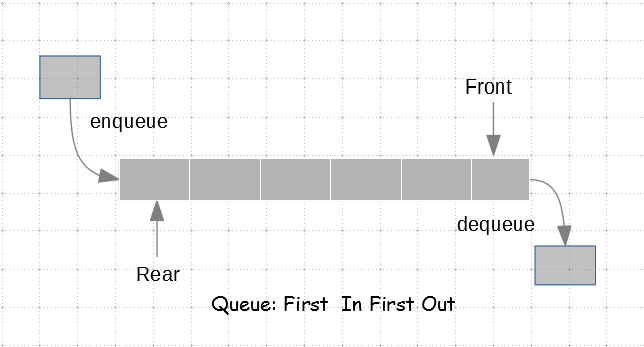
佇列是一種先進先出的一種資料結構,類似於堆疊,但差別在於佇列刪除的元素是最早加入的元素
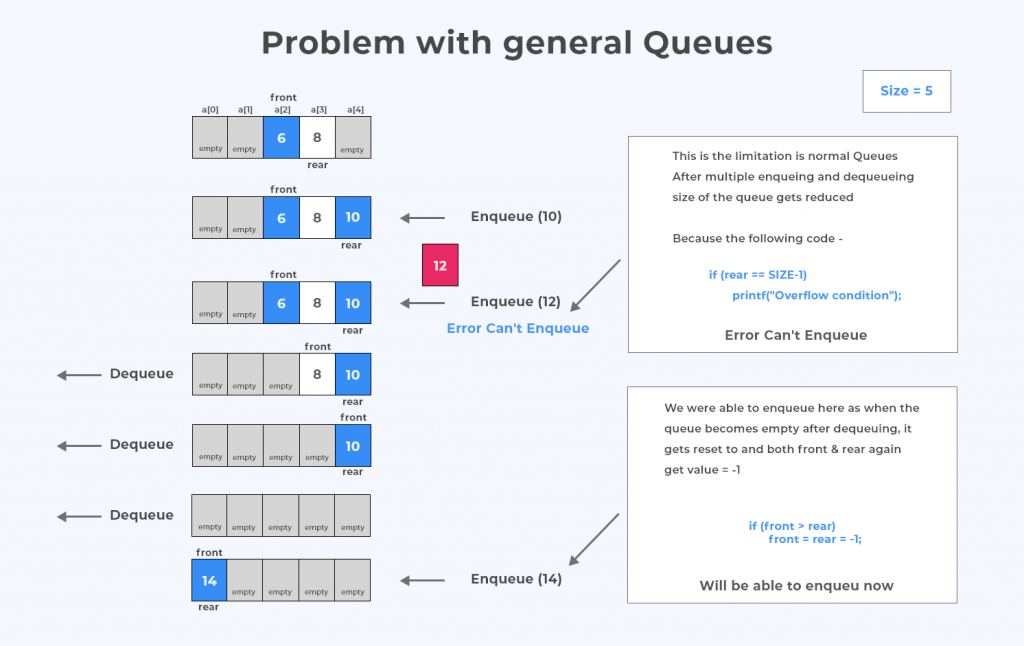
但是會發生陣列的前面還有空間,但因為rear已經大於等於n - 1,所以會產生佇列已滿的訊息,因此佇列常常以環狀佇列的方式來表示
Methods
Enqueue:加入資料到佇列裡Dequeue:刪除front變數所指的值isEmpty:檢查佇列是否是空的Peek:取得front變數所指的值
Time Complexity
Operation | Time Complexity | Worst Time Complexity | Space Complexity |
Enqueue | O(1) | O(n) | O(1) |
Dequeue | O(1) | O(n) | O(1) |
Peek | O(1) | O(1) | O(1) |
isEmpty | O(1) | O(1) | O(1) |
Queue Implementation
Array Implementation of the Queues
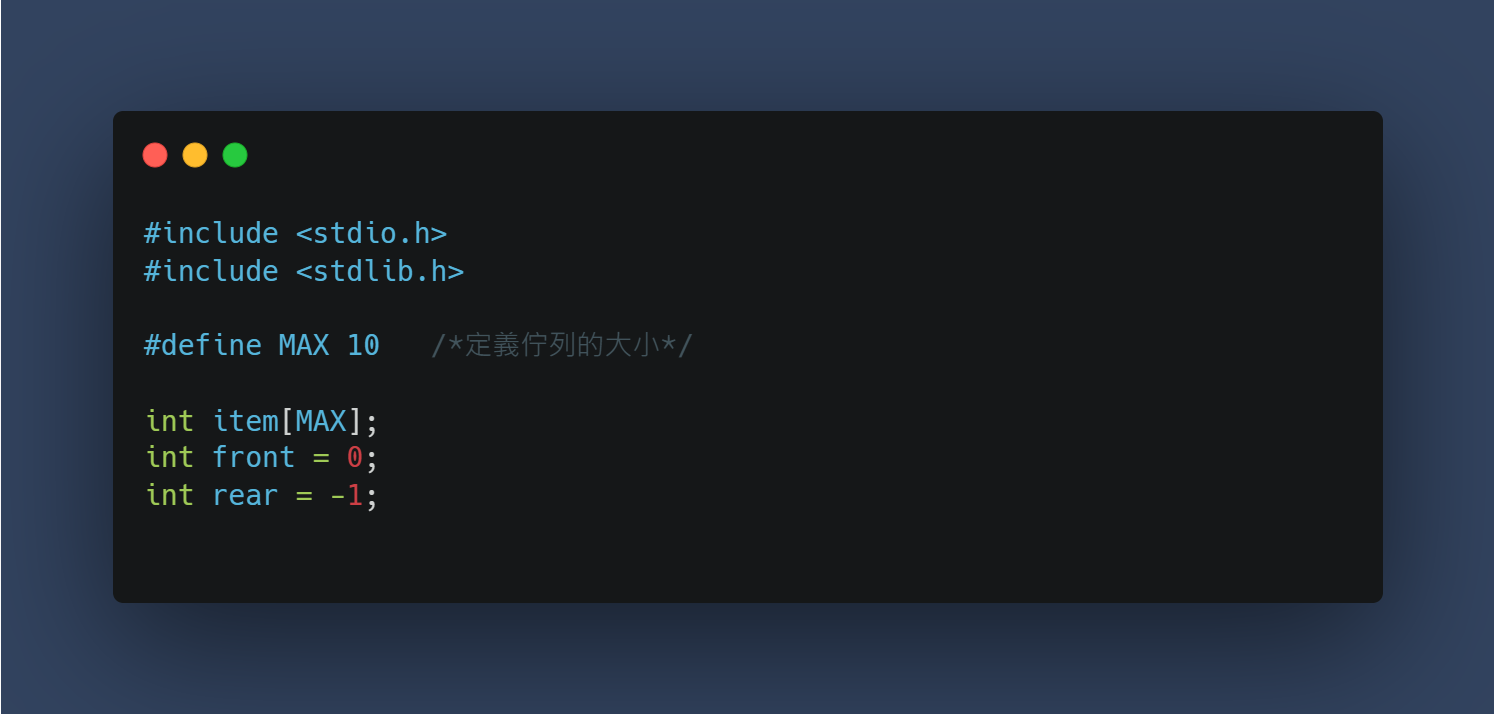
佇列的結構定義
Enqueue()
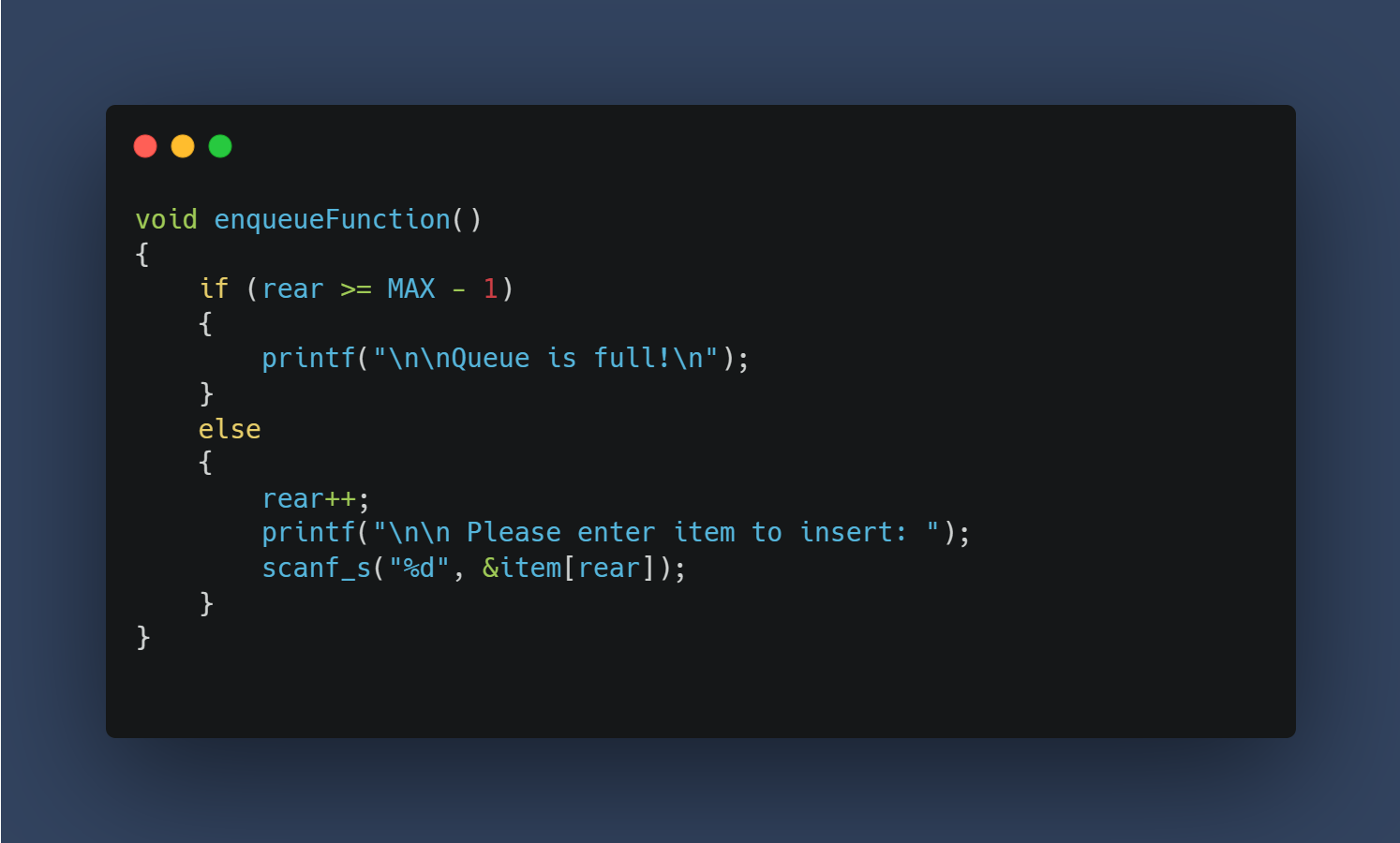
先判斷佇列是否已滿
如果還有空間就把rear變數加1
否則就顯示已滿訊息
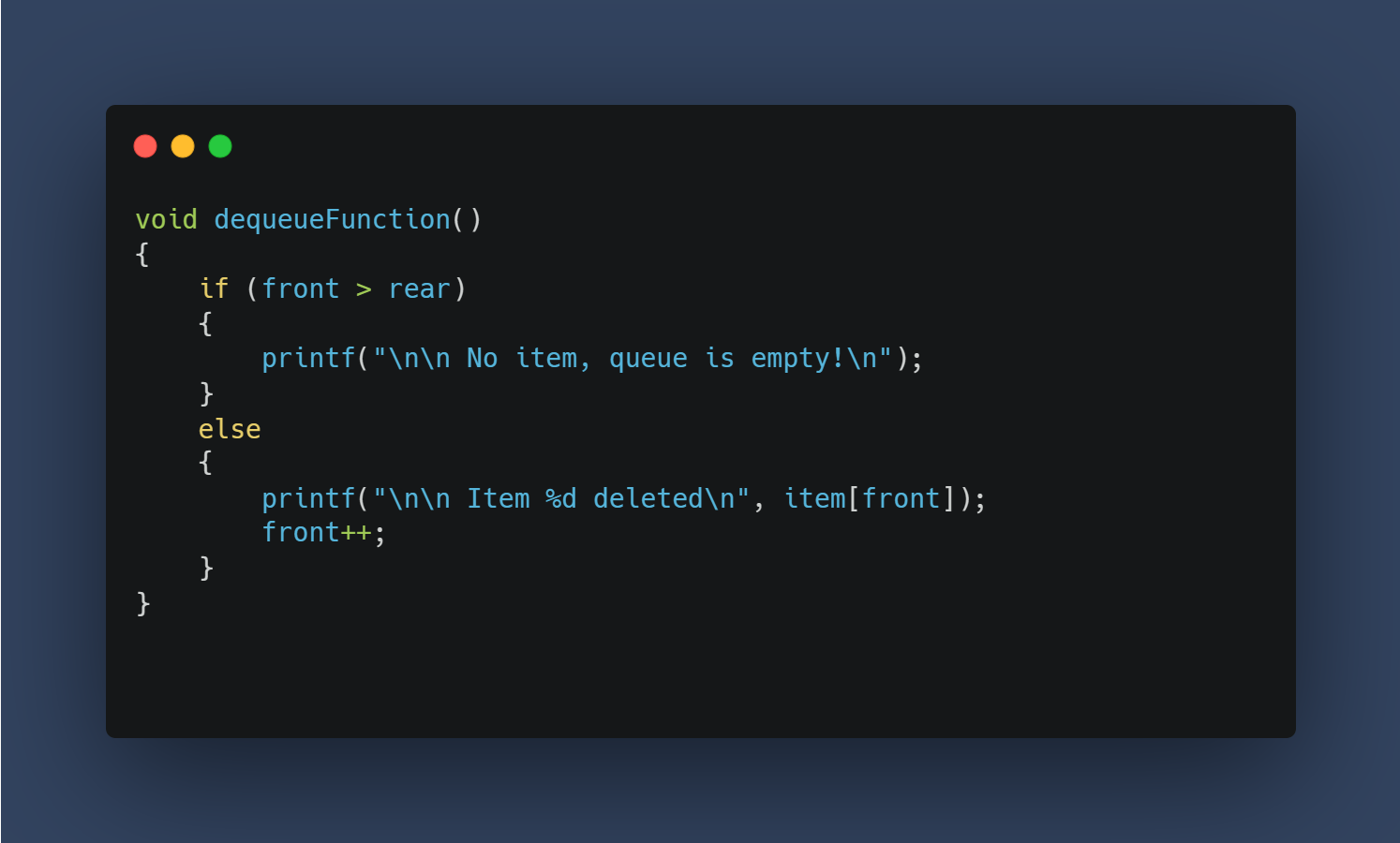
Dequeue()
先判斷佇列是否有資料
如果有就把
front加1來刪除元素
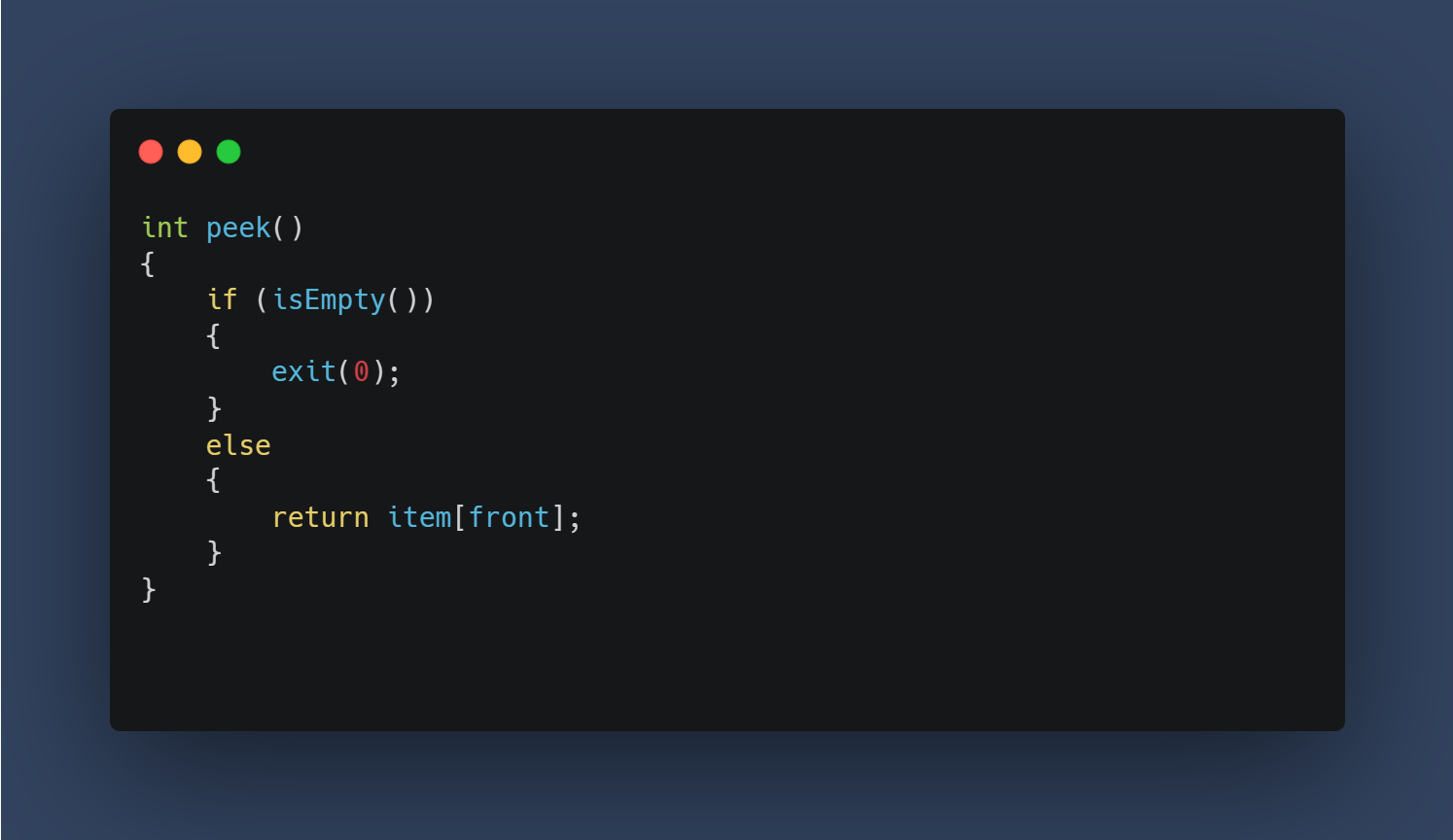
Peek()
判斷是否有資料,否則就顯示最前面的資料
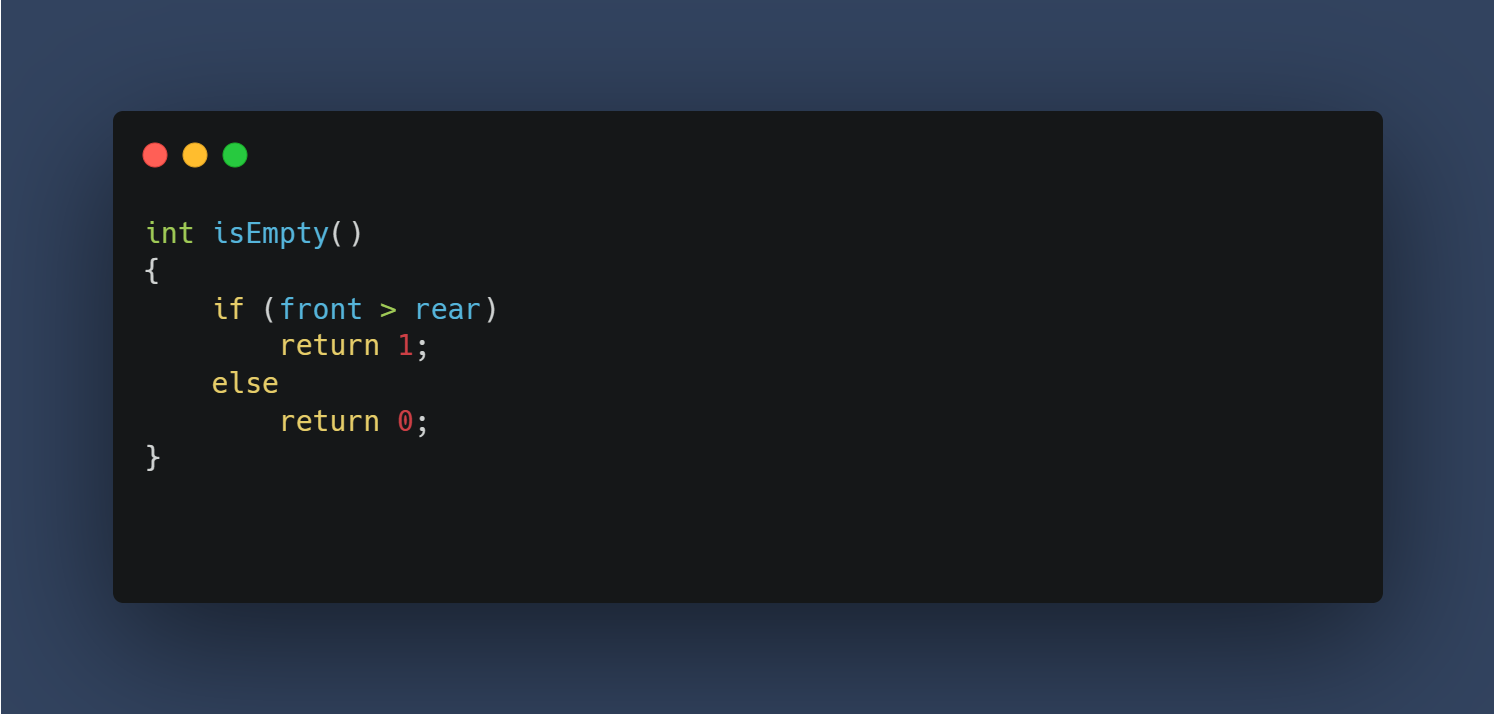
isEmpty()
如果front大於rear,代表佇列是空的,因為一開始front等於0而rear等於-1
完整的程式碼
#include <stdio.h>
#include <stdlib.h>

#define MAX 10   /*定義佇列的大小*/

void enqueueFunction(void);
void dequeueFunction(void);
void listFunction(void);
int isEmpty();
int isFull();
int clear();
int head();
int tail();

int item[MAX];
int front = 0;
int rear = -1;

int main()
{
    char option;
    while (1)
    {
        printf("\n *****************************\n");
        printf("       <1> insert (enqueue)\n");
        printf("       <2> delete (dequeue)\n");
        printf("       <3> list\n");
        printf("       <4> empty\n");
        printf("       <5> full\n");
        printf("       <6> clear\n");
        printf("       <7> peek\n");
        printf("       <8> Tail\n");
        printf("       <9> quit\n");
        printf(" *****************************\n");
        printf(" Please enter your choice...");
        option = getchar();
        switch (option)
        {
        case '1':
            enqueueFunction();
            break;
        case '2':
            dequeueFunction();
            break;
        case '3':
            listFunction();
            break;
        case '4':
            printf("Is queue empty? %s", isEmpty() ? "Yes" : "No");
            break;
        case '5':
            printf("Is queue full? %s", isFull() ? "Yes" : "No (there are 10 elements that can be accomodated)");
            break;
        case '6':
            clear();
            printf("Queue is cleared.");
            break;
        case '7':
            printf("Head: %d", peek());
            break;
        case '8':
            printf("Tail: %d", tail());
            break;
        case '9':
            printf("\n");
            return 0;
        }
        fflush(stdin);
    }
}

void enqueueFunction() {
    if (rear >= MAX - 1)
    {
        printf("\n\nQueue is full!\n");
    }
    else
    {
        rear++;
        printf("\n\n Please enter item to insert: ");
        scanf_s("%d", &item[rear]);
    }
}

void dequeueFunction() {
    if (front > rear)
    {
        printf("\n\n No item, queue is empty!\n");
    }
    else
    {
        printf("\n\n Item %d deleted\n", item[front]);
        front++;
    }
}

void listFunction() {
    int count = 0;

    if (front > rear)
    {
        printf("\n\n No item, queue is empty!\n");
    }
    else
    {
        printf("\n\n  ITEM\n");
        printf(" ------------------\n");
        for (int i = front; i <= rear; i++)
        {
            printf("  %-20d\n", item[i]);
            count++;
        }
        printf(" ------------------\n");
        printf("  Total item: %d\n", count);
    }
}

int isEmpty() {
    if (front > rear)
        return 1;
    else
        return 0;
}

int isFull() {
    if (rear == MAX - 1)
        return 1;
    else
        return 0;
}

int clear() {
    return front = 0, rear = -1;
}

int peek() {
    if (isEmpty()) {
        exit(0);
    }
    else {
        return item[front];
    }
}

int tail() {
    return item[rear];
}
Linked list Implementation of the Queues
佇列的結構定義
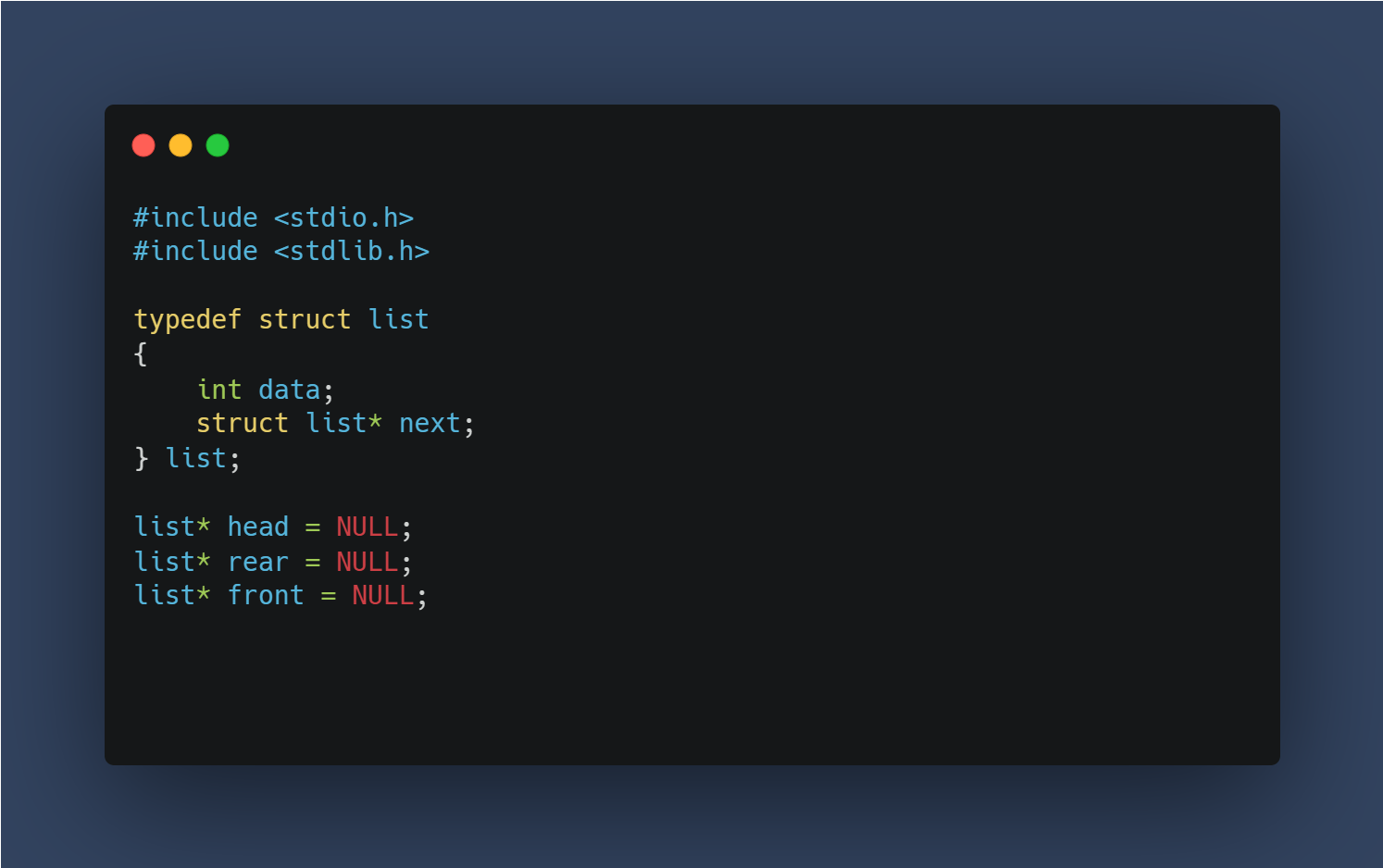
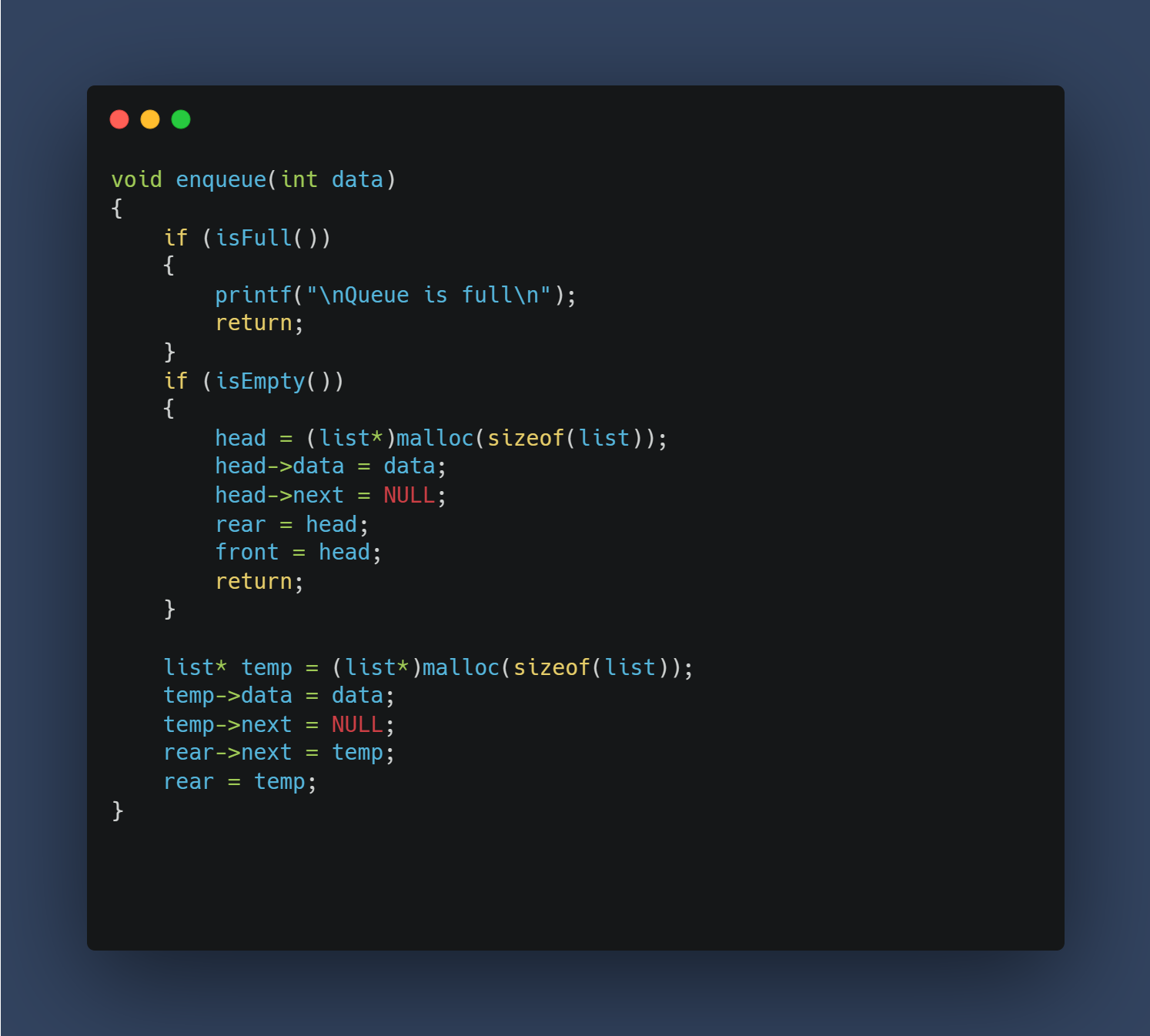
Enqueue()
基本上跟陣列的實現是差不多的,只是多了如果是空的話,就把head、rear、front都指向新結點,來代表是佇列的頭節點
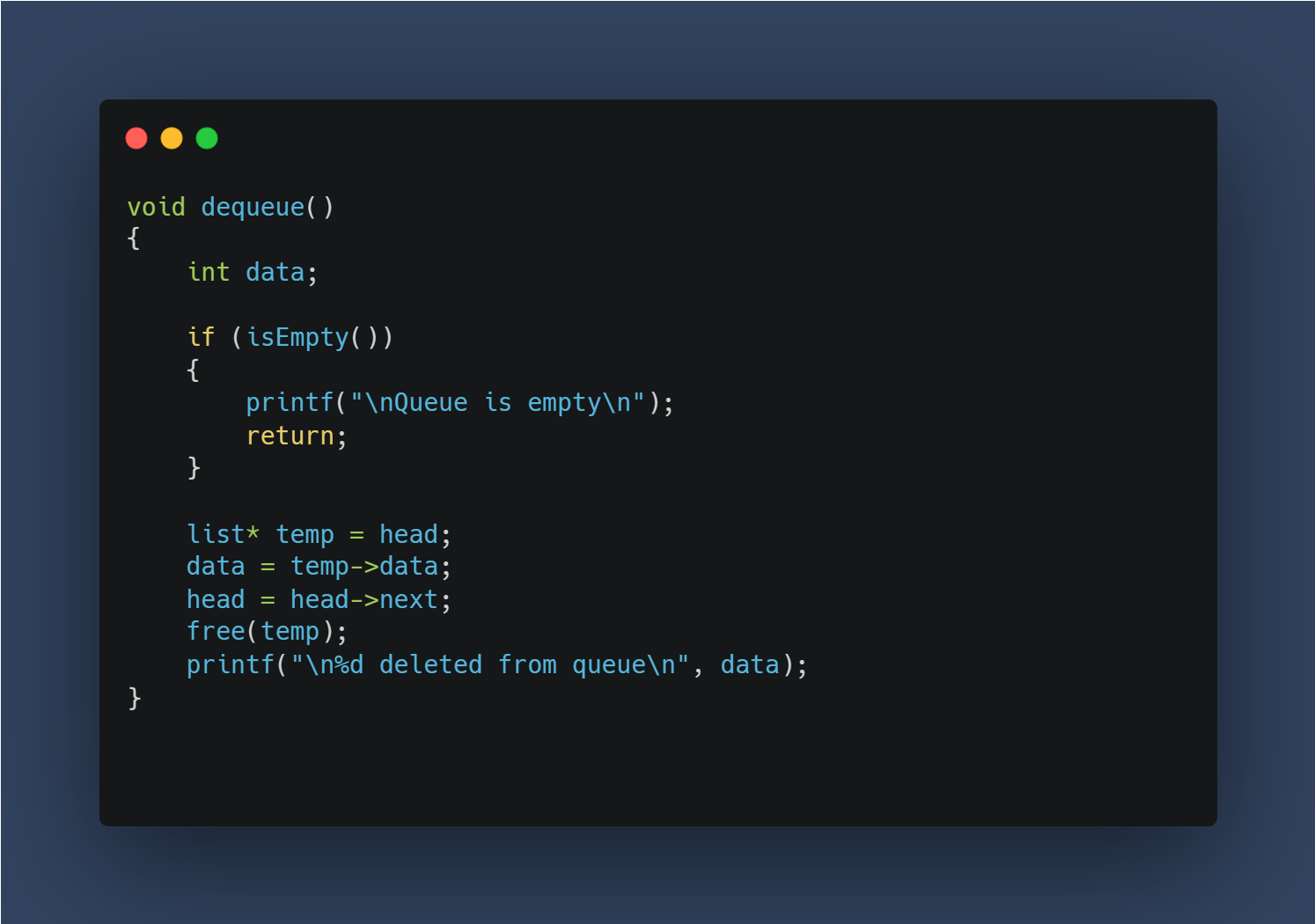
Dequeue()
鏈結串列要刪除節點時,只要把head移動到下一個位址就好了
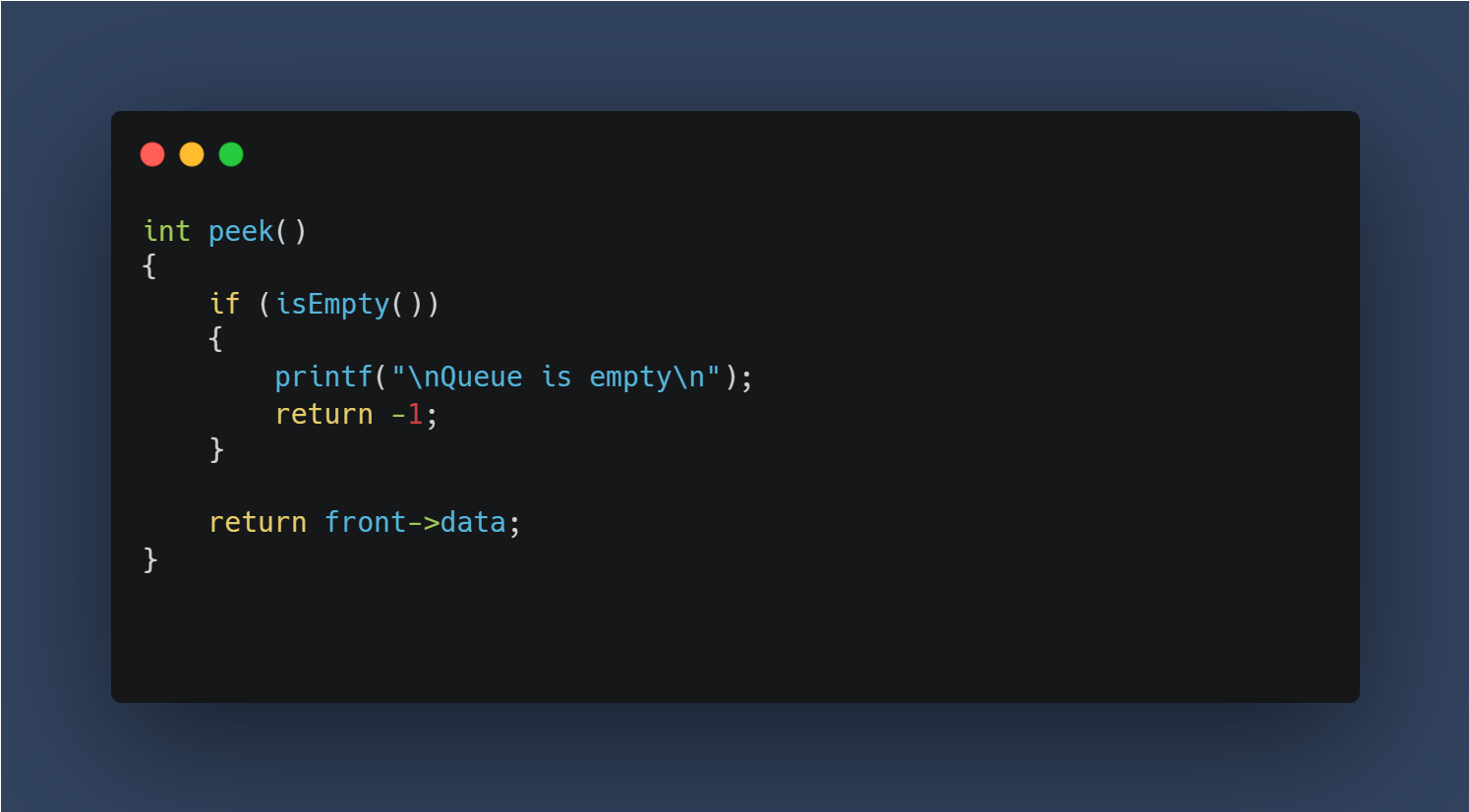
Peek()
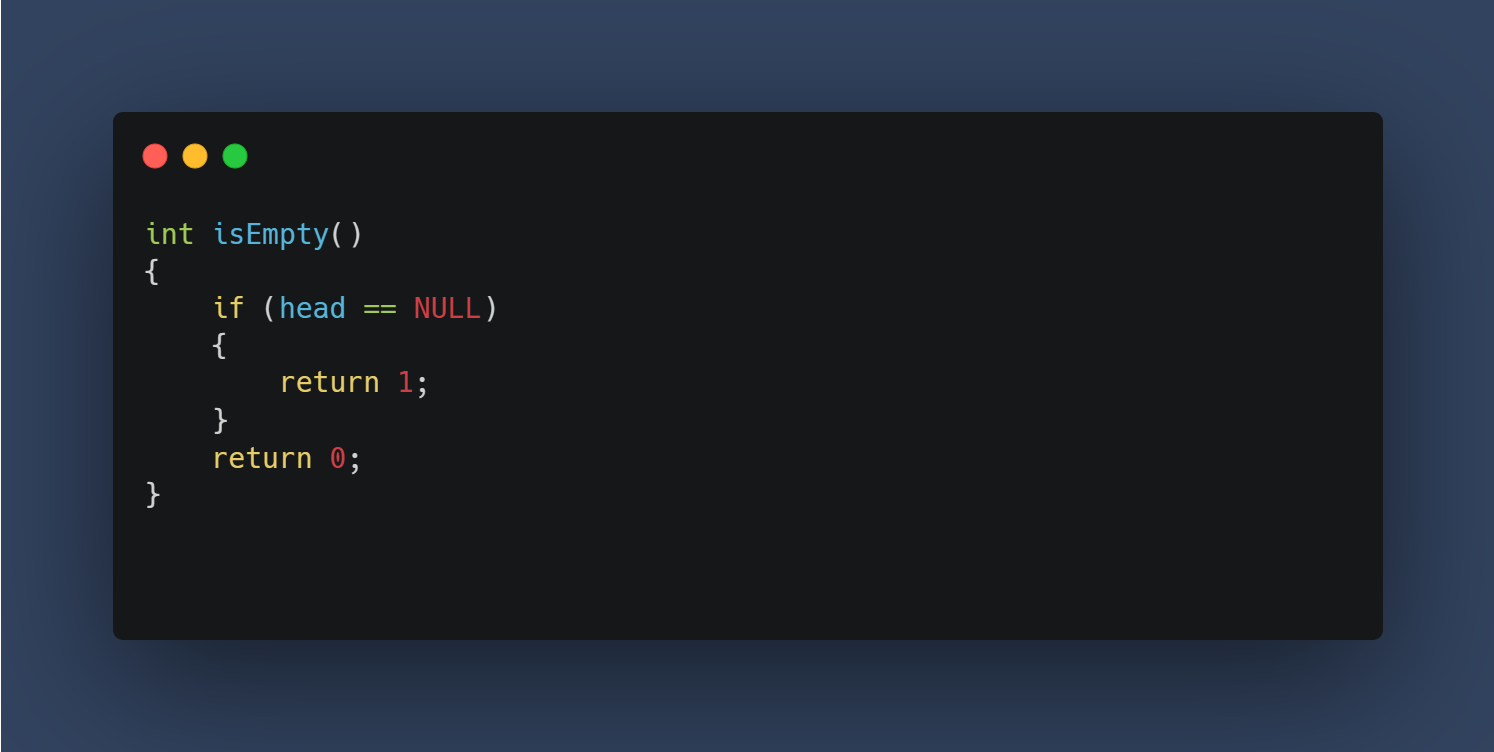
isEmpty()
完整的程式碼
#include <stdio.h>
#include <stdlib.h>

typedef struct list
{
    int data;
    struct list* next;
} list;

list* head = NULL;
list* rear = NULL;
list* front = NULL;

int isEmpty()
{
    if (head == NULL)
    {
        return 1;
    }
    return 0;
}

int isFull()
{
    list* temp = (list*)malloc(sizeof(list));
    if (temp == NULL)
    {
        return 1;
    }
    return 0;
}

void enqueue(int data)
{
    if (isFull())
    {
        printf("\nQueue is full\n");
        return;
    }
    if (isEmpty())
    {
        head = (list*)malloc(sizeof(list));
        head->data = data;
        head->next = NULL;
        rear = head;
        front = head;
        return;
    }
    list* temp = (list*)malloc(sizeof(list));
    temp->data = data;
    temp->next = NULL;
    rear->next = temp;
    rear = temp;
}

void dequeue()
{
    int data;
    if (isEmpty())
    {
        printf("\nQueue is empty\n");
        return;
    }
    list* temp = head;
    data = temp->data;
    head = head->next;
    free(temp);
    printf("\n%d deleted from queue\n", data);
}

void display()
{
    list* temp = head;
    if (isEmpty())
    {
        printf("\nQueue is empty\n");
        return;
    }
    printf("\nQueue is: ");
    while (temp != NULL)
    {
        printf("%d ", temp->data);
        temp = temp->next;
    }
    printf("\n");
}

int size()
{
    int count = 0;
    list* temp = head;

    if (isEmpty())
    {
        return count;
    }

    while (temp != NULL)
    {
        count++;
        temp = temp->next;
    }
    return count;
}

int peek()
{
    if (isEmpty())
    {
        printf("\nQueue is empty\n");
        return -1;
    }
    return front->data;
}

int rearElement()
{
    if (isEmpty())
    {
        printf("\nQueue is empty\n");
        return -1;
    }
    return rear->data;
}

int clear() {
    if (isEmpty()) {
        printf("\nThe queue is empty!\n");
        return 0;
    }
    list* current = head;
    list* next = NULL;
    while (current != NULL)
    {
        next = current->next;
        free(current);
        current = next;
    }
    head = front = rear = NULL;
    return isEmpty();
}

int main()
{
    int choice, data, position;
    while (1)
    {
        printf("\n1. Enqueue");
        printf("\n2. Dequeue");
        printf("\n3. Display");
        printf("\n4. Size");
        printf("\n5. Peek");
        printf("\n6. Rear element");
        printf("\n7. Is Empty?");
        printf("\n8. Clear queue");
        printf("\n9. Exit");
        printf("\n\nEnter your choice: ");
        scanf_s("%d", &choice);
        printf("\n");
        switch (choice)
        {
        case 1:
            printf("\nEnter data: ");
            scanf_s("%d", &data);
            enqueue(data);
            break;
        case 2:
            dequeue();
            break;
        case 3:
            display();
            break;
        case 4:
            printf("\nSize of queue is: %d", size());
            break;
        case 5:
            printf("\nFront element of queue is: %d", peek());
            break;
        case 6:
            printf("\nRear element of queue is: %d", rearElement());
            break;
        case 7:
            printf(isEmpty() ? "\nTrue\n" : "\nFalse\n");
            break;
        case 8:
            printf(clear() ? "\nCleared\n" : "\n清除失敗\n");
            break;
        case 9:
            exit(0);
        default:
            printf("\nInvalid choice\n");
        }
        printf("\n");
    }
}
佇列的優點:
簡單易懂:佇列的操作很簡單,只需要按照先進先出的原則即可。
操作效能:佇列可以很快地在表的前端進行刪除、在表的後端進行插入等操作。
佇列的缺點:
佇列大小固定:使用陣列實現佇列時,佇列大小是固定的,如果要擴大佇列的大小需要重新分配空間,這樣會浪費很多時間。
浪費陣列空間:使用陣列實現佇列時,可能會因為佇列空間不足而無法使用,這些空間無法被重複使用,但是如果佇列空間過大,又會浪費空間。


